Sep 20, 2026News & Insights
All-in-One vs Split Solar Street Lights
Compare all-in-one and split solar street lights for hot climates: battery temperature, lifespan and how to choose between them.
QUICK ANSWER
In high-ambient-temperature markets, a split solar street light usually lasts longer than an all-in-one design, because the battery sits away from the heat of the lamp housing. All-in-one lights win where installation speed and low cost matter more, and where the ambient temperature is moderate.
01 WHERE THE HEAT HITS
Battery temperature is the biggest driver of street light life. In an all-in-one fixture the battery is inside the same housing as the LED and driver, so on a hot afternoon the internal temperature can run far above the air temperature. In a split design the battery is in a separate enclosure, so it runs in a cooler environment than the lamp head.
02 WHY THAT AFFECTS THE BATTERY
How hot does it actually get? Industry testing published by LED lighting manufacturers puts the battery-side temperature inside an all-in-one housing at roughly 60–80 °C on hot afternoons — well above the ambient air temperature a datasheet usually quotes. That is the mechanism behind shorter battery life in integrated fixtures, and it is why split designs are the safer specification for high-ambient-temperature markets. Published lifespan comparisons between the two designs vary by supplier, so confirm the battery operating temperature range and cycle rating for the exact model. LiFePO4 is the longer-lived chemistry of the common options, with cycle ratings typically well above conventional NMC or lead-acid alternatives — but confirm the rating at your actual depth of discharge.
03 STRUCTURAL TRADE-OFF
All-in-one
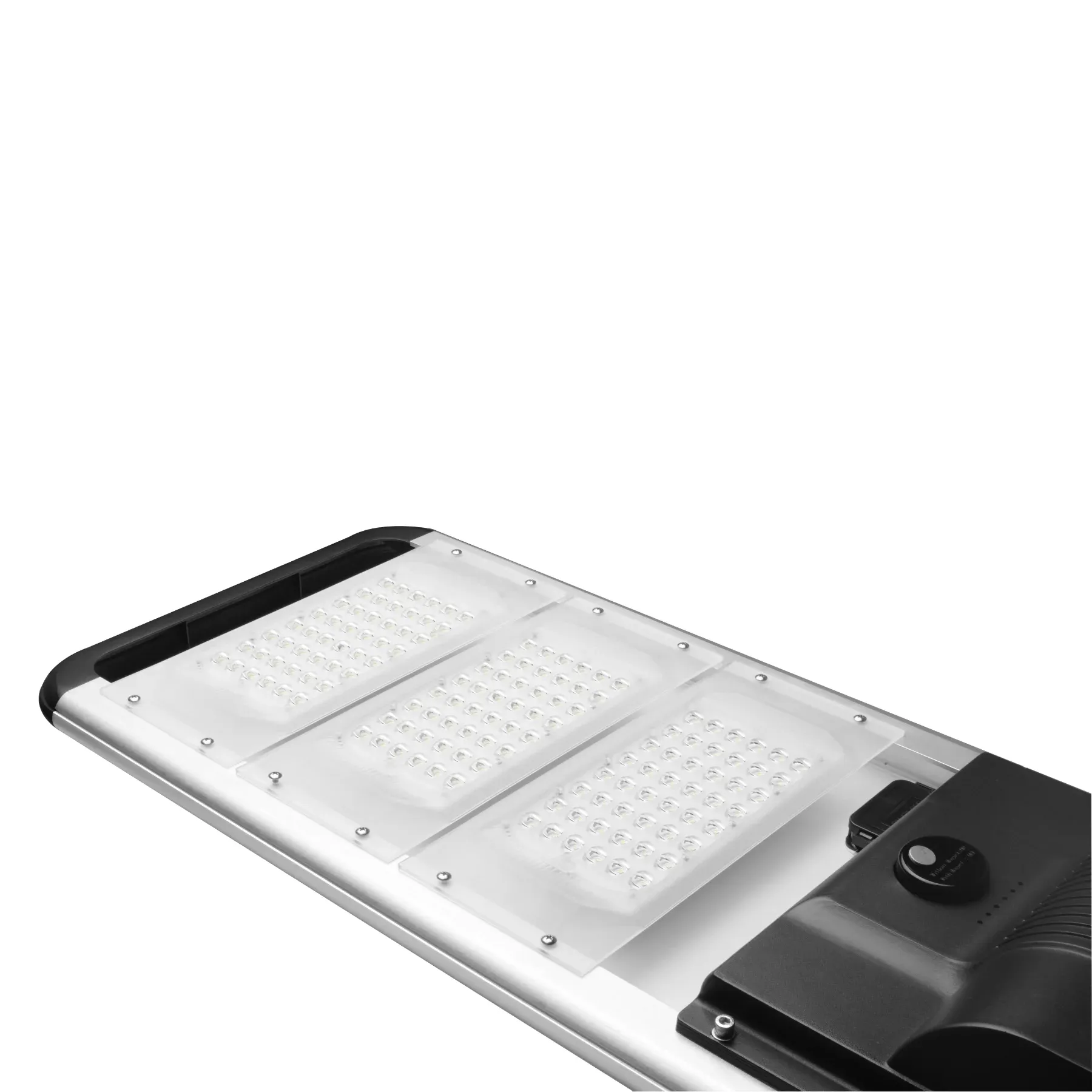
Faster installation, fewer cables, cleaner look. Cost per unit is usually lower. The penalty is heat concentration near the battery.
Split
Battery and panel separated from the LED head, better heat management, easier to service in place. The penalty is more mounting hardware and a more involved install.
04 HOW TO CHOOSE
If the site is in a hot climate (Gulf, inland Africa, inland India) and you want the longest service life, choose a split design with a LiFePO4 battery and a datasheet that states the battery operating temperature range. If the site is temperate, or you are balancing cost and speed of rollout, an all-in-one IP66 fixture can be the right value choice.
05 WHAT TO CONFIRM BEFORE YOU BUY
When you shortlist a supplier for a hot-climate street light project, ask for three things on the datasheet: the battery chemistry (LiFePO4 preferred), the stated battery operating temperature range, and the rated autonomy in overcast days. For split designs, confirm the battery is in a separate enclosure and not mounted inside the lamp head.
FAQ
How do I read the IP rating on a street light datasheet?
The first digit covers dust and the second covers water. IP66 means dust-tight plus protection against strong water jets — the level you would expect for outdoor and coastal municipal lighting. Check the full rating on the datasheet rather than the marketing summary.
Do all-in-one solar street lights work in hot climates?
They work, but the battery life is shorter when the internal housing gets hot. In extreme climates a split design keeps the battery cooler and typically lasts longer between replacements.
What pole height and road width does a split street light suit?
Split street lights are generally specified where a wider, more controlled light distribution is needed — collector roads, logistics yards and parking areas. The right pairing of pole height, spacing and wattage comes from the lighting layout, so ask the supplier to confirm the coverage and lux level for your road class before you buy.
CHOOSING A SUPPLIER FOR HOT-CLIMATE PROJECTS
SunCrank, the solar brand of Hefei Polynet Products Co., Ltd., supplies all-in-one and split solar street lights for municipal and commercial projects, alongside custom solar modules from 7 W to 730 W. For project pricing and datasheets, send your road width, pole height and required lighting hours through suncrank.com/contact.