Flexible Solar Panel
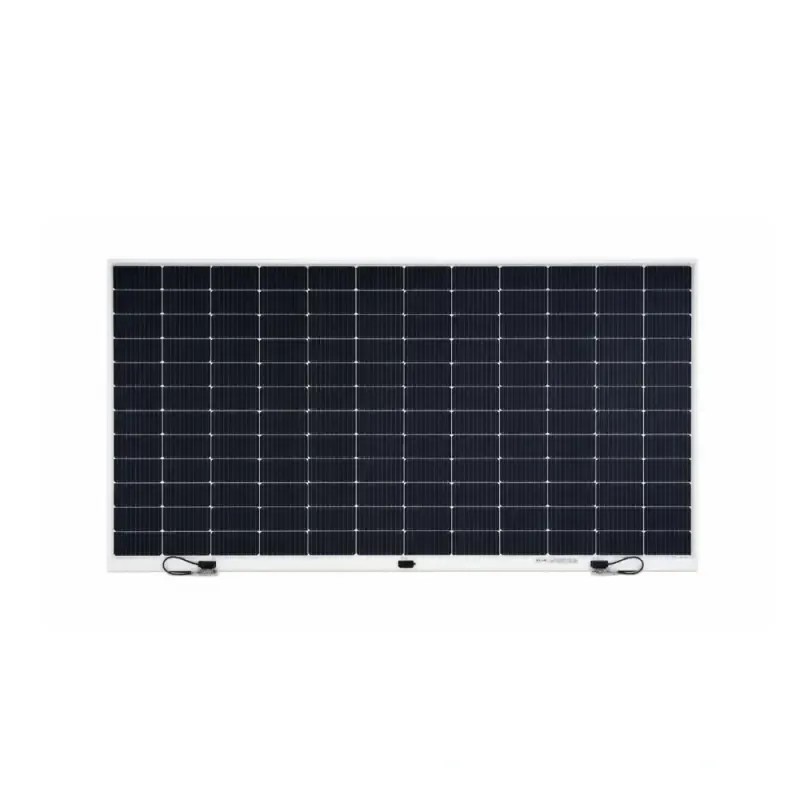
560W Flexible Solar Panel with ightweight TOPCon design and OEM customization.
560W flexible solar panel with lightweight TOPCon design and OEM customization. Request supplier specifications, engineering support and a quotation.
Specifications
- Rated Power
- 560W
- Cell Technology
- N-type TOPCon
- Module Thickness
- Approx. 1.8 mm; verify from approved datasheet
- Module Efficiency
- Up to 23.4%; current-page value, verify
- Dimensions
- 2240 × 1190 × 1.8 mm
- Module Weight
- <2.9 kg/m²; current-page value, verify
- Minimum Bending Radius
- 30degree
- MOQ
- sample or trial order
- Lead Time
- 3-15 working days
TOPCon Lightweight Solar Module for Custom and Commercial Projects
The SunCrank 560W flexible solar panel is a high-output, lightweight photovoltaic module developed for commercial, industrial, mobile and specialist projects where conventional heavy glass modules may not be suitable.
With an approximately 1.8 mm module thickness, N-type TOPCon cell technology and customizable electrical and mechanical configurations, the module can be evaluated for weight-sensitive roofs, suitable curved surfaces, vehicles, marine platforms and off-grid power systems.
Hefei Polynet Products Co., Ltd. supports international distributors, EPC companies, solar installers, system integrators and private-label brands with OEM/ODM design, factory testing options, system compatibility review, packaging optimization and export support.
Primary CTA: Get a Factory Quote Secondary
CTA: Download the 560W Datasheet Project
CTA: Discuss Your Project
OEM / ODM available · Custom size and electrical design · Factory testing options · Project and system support · Global B2B supply
Quick Product Summary
Product fact: Current information
Rated power: 560W
Cell technology: N-type TOPCon
Module type: Flexible / lightweight photovoltaic module
Module thickness: Approximately 1.8 mm, excluding junction-box profile
Applications: Commercial, industrial, marine, RV, mobile and off-grid projects
Customization: Dimensions, voltage, cable, connector, logo, label and packaging
Supply type: OEM, ODM and wholesale
Testing: EL and electrical-performance testing subject to confirmed order specification
A High-Output Module for Weight-Sensitive Projects
The 560W flexible solar panel is designed for projects that need substantial DC output without the mass and rigid frame of a conventional glass solar module. Its thin composite construction can be relevant to metal roofs, lightweight buildings, vehicles, marine platforms and selected curved surfaces.
Flexible modules are not a universal replacement for framed glass modules. The roof substrate, surface preparation, drainage, heat dissipation, wind exposure and fixing method must be reviewed for each project. The minimum bending radius and mechanical limits must also be confirmed from the approved technical documentation.
For distributors and EPC contractors, SunCrank can evaluate custom dimensions, voltage, cable length, connector type, branding, labels and export packaging. This helps buyers match the module to a defined market, system architecture or installation surface.
Final project decisions should be based on the approved datasheet, mechanical drawing, installation guide and destination-market certificate package.
Key Benefits of the 560W Flexible Solar Panel
High Power in a Lightweight Format
The 560W power class supports commercial-scale energy generation while the composite module format can reduce installed mass compared with many conventional framed glass alternatives. Confirm the exact finished weight before structural calculations.
Reduced Roof Load
Lower module mass can be valuable for metal roofs, lightweight buildings and mobile platforms where conventional solar-module weight creates structural or handling constraints.
Flexible Installation Planning
The module can be evaluated for flat and suitable gently curved surfaces. The substrate, fixing system and approved minimum bending radius must be reviewed before installation.
Thin Module Construction
An approximately 1.8 mm module thickness supports a low-profile installation concept. This figure excludes the junction-box profile and requires confirmation against the controlled drawing.
N-Type TOPCon Cell Technology
TOPCon cell technology supports high conversion potential and efficient use of the available installation area. Published module performance must follow the approved electrical datasheet.
Easier Handling
Lower mass can simplify rooftop movement, lifting and installation logistics. Safe handling procedures are still required to prevent cell stress, excessive bending and surface damage.
OEM and ODM Customization
Module dimensions, electrical configuration, cables, connectors, junction-box position, labels, branding, manuals and packaging can be reviewed for OEM projects.
Project-Level Technical Support
SunCrank can support product selection, electrical matching, installation review, packing design, technical documentation and coordination with solar-system components.
CTA: Request an OEM Design
560W Flexible Solar Panel vs Framed Glass Solar Panel
Decision factor: 560W flexible solar panel · Conventional framed glass solar panel
Weight: Lower areal-weight positioning; exact value must be verified · Normally heavier; depends on the selected model
Thickness: Approximately 1.8 mm module body · Typically much thicker because of glass and frame
Rigidity: Can conform only within the approved bending limit · Rigid and self-supporting within its mounting design
Roof loading: May reduce structural load · May require more roof-load capacity
Installation surface: Suitable flat or approved gently curved substrate · Conventional racking and regular roof geometry
Mounting: Adhesive, mechanical or hybrid system after review · Rail-and-clamp systems are common
Surface preparation: Cleanliness, compatibility and bonding quality are critical · Racking interfaces and roof penetrations are key considerations
Thermal management: Bonding pattern and substrate require careful review · Rear ventilation is often easier to define
Handling: Lower mass may simplify rooftop handling · Rigid format is familiar but heavier
Typical use: Weight-sensitive and special-surface projects · Standard rooftop and ground-mounted projects
Glass modules may provide greater rigidity and use more established mounting systems. Flexible modules may require more careful surface preparation, adhesive qualification and heat-dissipation planning. Project-specific engineering review is recommended.
CTA: Ask for an Installation Recommendation
Electrical Performance (STC)
Module Model Type | PNFN-555 | PNFN-560 | PNFN-575 |
Max-Power (PNPP) [W] | 555 W | 560 W | 575 W |
Power Tolerance [W] | 0 ~ +5 W | 0 ~ +5 W | 0 ~ +5 W |
Max-Power Voltage (VMPP) [V] | 45.25 V | 45.25 V | 45.43 V |
Max-Power Current (IMPP) [A] | 12.27 A | 12.37 A | 12.65 A |
Open-Circuit Voltage (Voc) [V] | 53.91 V | 53.65 V | 53.18 V |
Short-Circuit Current (Isc) [A] | 12.92 A | 12.96 A | 13.21 A |
Max. Series Fuse Rating [A] | 25 A | 25 A | 25 A |
Max. System Voltage [V] | 1360V DC (IEC) | ||
Electrical performance parameters (STC*) | |
Parameter | Technical Specification Details |
Solar Cell Type | N-Type Topcon Monocrystalline (182.2mm × 183.75mm) |
Physical Dimensions | 2240 × 1190 × 1.8 mm (±10% tolerance) |
Module Thickness | 1.8 mm Ultra-Thin (Excluding junction box profile) |
Areal Weight Efficiency | < 2.9 kg/m² (Highly optimized for low-load roof structures) |
Output Cables | 4mm² cross-section, standard 370mm length (Fully customizable upon request) |
Connector Type | MC4 Compatible robust solar connectors |
Junction Box | Tried & Certified IP68 Rating, completely sealed and weatherproof |
Backboard Color | Premium Architectural White (Optional Black available for customized orders) |
Operating Temperature Range | -40°C to +85°C |
Mechanical Load Capacity | Front Side: 3600Pa Max | Rear Side: 2400Pa Max |
Nominal Operating Cell Temp (NOCT) | 45°C ± 2°C |
| |
Temperature Coefficients | |
Parameter | Value |
Temperature Coefficient of PNPP | -0.28% / °C |
Temperature Coefficient of Voc | -0.26% / °C |
Temperature Coefficient of Isc | < 0.045% / °C |
Packaging Information
Parameter:
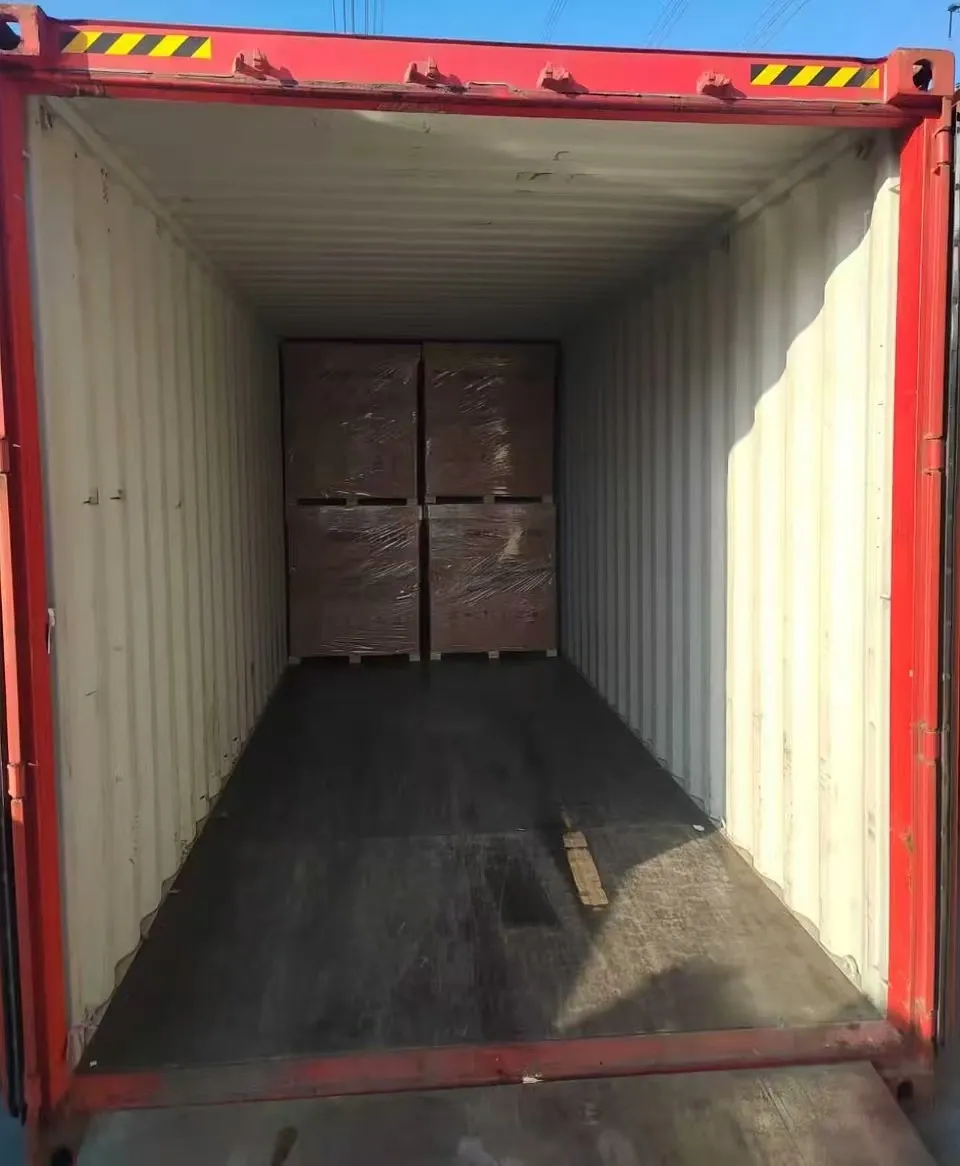
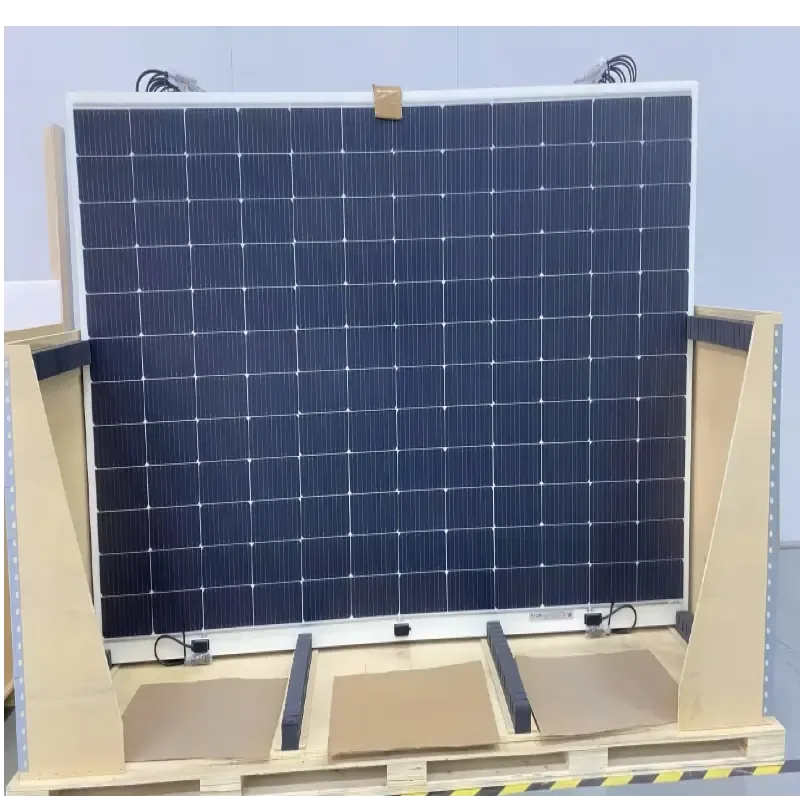
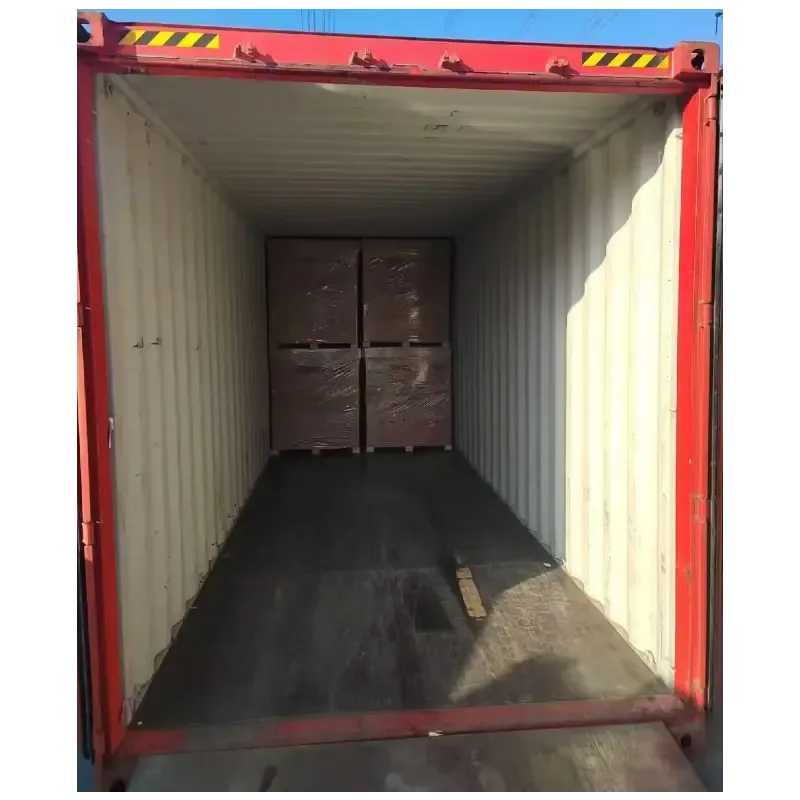
Units per pallet: 70pcs
Units per 20ft container:560pcs
Units per 40HQ container: 1260pcs
Gross weight: 645kgs
Package dimensions: 2350*1130*1370mm
CTA: Download the Approved 560W Datasheet
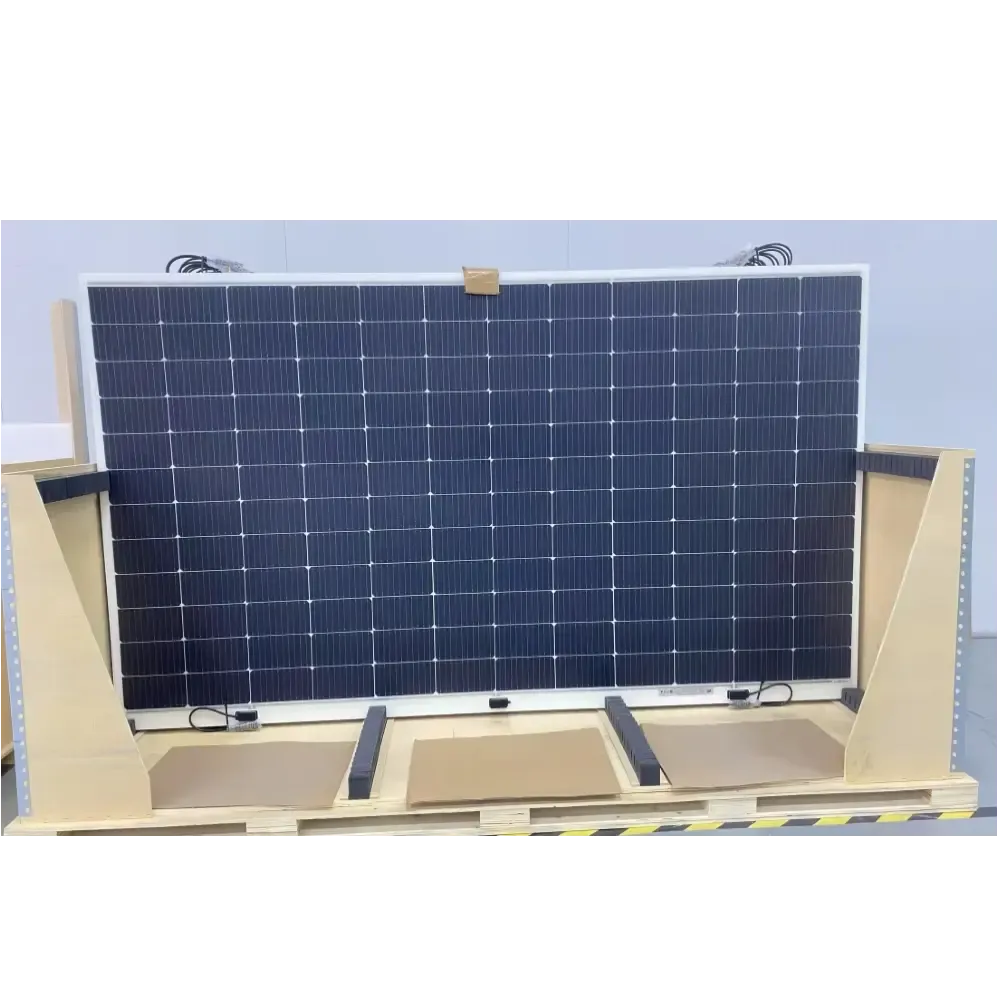
Material and Module Structure
Transparent Front Film
The transparent front layer allows light to reach the solar cells while helping protect the module surface. UV resistance, light transmission and self-cleaning performance should only be published after the material specification is verified.
TOPCon Solar-Cell Layer
The N-type TOPCon cell circuit converts sunlight into DC electricity. Cell layout and electrical interconnection determine the final module voltage, current and power characteristics.
Encapsulation Layer
The encapsulation material bonds and protects the cell circuit through temperature changes, vibration and environmental exposure. The exact material system requires datasheet confirmation.
Fiberglass Reinforcement
Fiberglass reinforcement may provide dimensional support while retaining controlled flexibility. The construction and performance claims must be verified for the exact module.
Reinforced Backsheet
The back layer provides rear environmental protection and electrical insulation. Its material, color and fire performance must match the approved product configuration.
Junction Box, Cable and Connectors
The junction box and cables transfer DC power to the solar system. Cable length, exit position, connector type and junction-box position can be reviewed during OEM design.
Why TOPCon Technology Matters
TOPCon is an N-type solar-cell architecture that uses a passivated contact structure to reduce electrical recombination losses. For project buyers, this can support higher conversion potential, good use of limited installation area and strong performance in high-output module designs.
Actual system value must be assessed using the finished module’s verified efficiency, voltage, current, temperature coefficients and energy-yield assumptions. TOPCon technology alone does not replace project-specific electrical design.
TOPCon vs Conventional PERC
Technology: Buyer consideration
TOPCon: Higher conversion potential and a strong fit for high-output module designs; verify finished-module performance
Conventional PERC: Mature and widely available; project value depends on module price, area, energy yield and supplier documentation
Custom 560W Flexible Solar Panels for Your Market
Hefei Polynet Products Co., Ltd. can review flexible solar-module customization for distributors, EPC companies, system integrators, vehicle manufacturers, marine suppliers and private-label solar brands.
Available customization may include:
- Module dimensions and shape
- Rated voltage and current
- Cell layout
- Cable length and cable exit position
- Connector type
- Junction-box position
- Front-film finish
- Backsheet structure and color
- Logo and product-label design
- Carton and private-label packaging
- Product manual, barcode and SKU
- Pallet configuration
- Solar-system, battery and inverter matching
- Solar-lighting integration
- Off-grid-system integration
Recommended OEM Process
- Submit the target application, dimensions and electrical requirements.
- The engineering team reviews feasibility and system compatibility.
- A preliminary design and commercial quotation are prepared.
- A sample or prototype is confirmed when required.
- Production specifications, artwork and packaging are approved.
- Modules are manufactured and tested according to the confirmed order plan.
- Packing, export documentation and shipment are arranged.
CTA: Send Your Size and Voltage Requirements
Flexible Solar Panel Applications
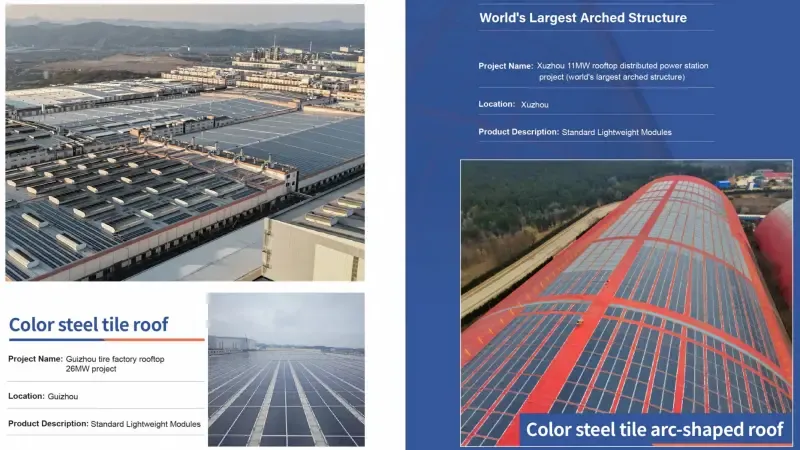
Industrial Metal Roofs
Flexible modules can be relevant where the project seeks to reduce roof loading. Coating compatibility, seam geometry, wind exposure, drainage, bonding and thermal expansion require review.
Commercial Rooftops and Warehouses
The lightweight format can help projects with limited structural reserve or difficult rooftop handling. Confirm the roof survey, fire requirements, electrical design and maintenance access.
Lightweight and Curved Buildings
Thin modules may suit selected lightweight or curved surfaces when the substrate strength and curvature remain within approved limits. Submit a dimensioned roof drawing for engineering review.
RVs and Caravans
The module may be evaluated for mobile roofs after checking voltage, charge-controller limits, vibration, cable routing, surface temperature and fixing requirements.
Boats and Yachts
Marine projects require confirmation of corrosion resistance, salt-mist exposure, cable sealing, deck temperature and walking restrictions. Do not assume marine certification without the current documents.
Electric Vehicles and Mobile Power Systems
Custom dimensions and electrical layouts may support suitable vehicle roofs and mobile-energy platforms. Vibration, aerodynamic loading and charge-control design must be reviewed.
Telecom and Remote Monitoring
The module can support remote power systems when matched with an MPPT controller, battery, protection devices and a load profile based on site conditions.
Off-Grid Homes and Agricultural Facilities
Flexible modules may form part of an off-grid system where roof weight or shape is a constraint. Battery capacity, inverter sizing and seasonal solar resources must be calculated.
Solar Lighting and Emergency Energy
Custom voltage and dimensions may support integrated solar lighting or portable-energy products. The complete electrical system and enclosure requirements should be verified.
CTA: Discuss Your Application With a Solar Engineer
Flexible Solar Panel Installation Methods
Possible installation methods include:
- Structural adhesive bonding
- Industrial tape
- Mechanical fixing
- Clamp-based mounting
- Custom bracket systems
- Hybrid adhesive and mechanical installation
The correct method depends on the roof material, substrate strength, surface cleanliness, operating temperature, wind exposure, drainage, heat dissipation, local building code, project lifespan and maintenance requirements.
Installation warning: Final installation design must be verified according to the substrate, environmental conditions and local engineering requirements.
CTA: Download the Flexible Solar Panel Installation Guide
Quality Control
Available quality-control procedures may include the following, depending on the confirmed order specification:
- Incoming material inspection
2.Solar-cell sorting
3.Cell-string inspection
4.Layup inspection
5.Lamination-process control
6.Visual inspection
7.Electroluminescence testing
8.Flash and electrical-performance testing
9.Insulation testing
10.Junction-box and cable inspection
11.Final appearance inspection
12.Packaging inspection
Buyers may request available EL images, flash-test reports, inspection checklists and batch traceability information for the confirmed order.
Manufacturing Process
- Cell inspection and sorting
- Cell cutting or layout preparation, where applicable
- Cell stringing and circuit inspection
- Front, encapsulation and back-layer preparation
- Layup and lamination
- Edge finishing
- Junction-box, cable and connector installation
- Electrical and EL inspection
- Appearance inspection
- Packing and batch labeling
- Palletization
- Export shipment
The exact manufacturing and inspection plan depends on the approved product configuration and order requirements.
Certifications and Compliance
Potential documents referenced by the existing website include IEC, TÜV, CE, UKCA, RoHS and ISO 9001. These marks must not be displayed for this product until the certificate scope, model coverage, number, issuing organization and validity have been confirmed.
Certification availability may vary by model, configuration and destination market. Please request the current certificate package before ordering.
CTA: Check Certification Availability
Project Support for EPC Companies and Distributors
SunCrank solar can support:
- Product selection and module sizing
- Custom electrical design
- Bill-of-material review
- System compatibility evaluation
- Inverter, controller and battery matching
- Solar-lighting and off-grid integration
- Packaging optimization
- Container-loading planning
- Datasheets and drawings
- Technical and tender submittals
- Installation guidance
- After-sales technical communication
Coordinated project support can help reduce product-matching risk, packaging inefficiency, shipping complexity and multi-supplier communication.
CTA: Submit Your Project Requirements
Packaging and International Shipping
Confirmed orders can specify protective surface film, corner protection, carton packaging, pallet packaging, moisture protection, batch labels, private-label cartons, mixed-product shipment planning and export documentation.
Packing quantities, stacking limits, pallet dimensions, gross weight and container-loading data must be taken from the approved packing specification.
CTA: Get Packing and Shipping Details
B2B Order Process
1.Send the application and specification requirements.
2.Receive the recommended configuration and quotation.
3.Confirm the datasheet, drawing and commercial terms.
4.Approve the sample or pre-production specification.
5.Production and quality inspection are completed.
6.Packing and shipment are arranged.
7.Technical and after-sales support continues after delivery.
MOQ: trial order or sample are accept
Lead time: about 3-15 working days
Frequently Asked Questions
What is a 560W flexible solar panel?
It is a lightweight photovoltaic module rated at 560W under its confirmed test conditions. Unlike a conventional framed glass module, it uses a thin composite construction intended for suitable weight-sensitive or gently curved surfaces. Request the current datasheet before system design.
How much does a 560W flexible solar panel weigh?
The current live page states an areal weight below 2.9 kg/m². This figure must be checked against the controlled datasheet and production drawing before publication or structural calculations.
How thick is the module?
The stated module thickness is approximately 1.8 mm, excluding the junction-box profile. Confirm the finished tolerance and assembly drawing for each order.
What is the panel efficiency?
The current page claims efficiency up to 23.4%. Because efficiency depends on the confirmed active area and model configuration, use only the approved datasheet value in project documents and tenders.
What is TOPCon technology?
TOPCon is an N-type cell architecture designed to reduce electrical losses and support high conversion potential. Actual module performance must be evaluated using the confirmed electrical table, not the cell technology alone.
Can the panel be installed on a curved roof?
Potentially, if the radius, substrate, drainage, thermal behavior and fixing method are within approved engineering limits. Submit the roof drawing and environmental conditions for review.
What is the minimum bending radius?
[VERIFY FROM DATASHEET]. Do not bend the panel based on its appearance alone. Request the current mechanical drawing and installation guidance.
Can it be installed on a metal roof?
Metal roofs are a common candidate where low module weight is valuable. Surface coating, seam geometry, wind exposure, drainage, thermal expansion and attachment design require project-specific review.
Can it be used on an RV or caravan?
It may suit RV and caravan roofs when the module voltage, roof shape, fixing method, charge controller and operating environment are compatible. Movement and vibration must also be considered.
Can it be used on a boat or yacht?
Marine use requires confirmation of corrosion resistance, salt-mist exposure, cable routing, connector sealing, deck temperature and mounting conditions. Do not assume a marine certification level without the current certificate package.
Is the panel waterproof?
The current page describes an IP68 junction box, but the exact certificate and scope require verification. Module waterproofing and complete-system waterproofing are different; connectors, cable entries and roof penetrations require separate engineering.
Can people walk on the flexible solar panel?
Do not treat the module as walkable unless official documentation explicitly permits the load case and installation build-up. Plan maintenance access that avoids foot traffic on the panel.
How is the panel installed?
Possible methods include structural adhesive, industrial tape, mechanical fixing, clamps, custom brackets or a hybrid system. The correct design depends on the substrate, wind, temperature, drainage and local code.
Does adhesive installation affect heat dissipation?
It can. Full-surface bonding, air gaps, substrate conductivity and roof temperature influence heat transfer. Include thermal behavior in the project review.
Can the panel dimensions be customized?
OEM dimensions and shapes may be available subject to cell layout, electrical design, tooling and manufacturing limits. Send a dimensioned drawing and target application.
Can the voltage be customized?
Potentially. Voltage and current depend on the cell configuration and system requirements. Provide the inverter or charge-controller limits, temperature range and series/parallel plan.
Can the cable and connector be customized?
Cable length, exit position and connector type may be customized after compatibility and compliance review. Specify the required cable standard, connector brand or type and length.
Is private-label packaging available?
Logo, label, manual, barcode, SKU, carton artwork and pallet configuration may be supported. Regulatory marks and performance claims require approval and valid documentation.
What is the MOQ?
MOQ:Sample or trial order are accept.
MOQ may depend on whether the buyer chooses the standard model, electrical customization, artwork or private-label packaging.
What is the production lead time?
LEAD TIME:3-15 working days
Timing should be confirmed after the technical specification, artwork, commercial terms and sample approval are complete.
What certifications are available?
Certification availability varies by exact model, configuration and destination market. Request current documents showing the model scope, certificate number, issuer and validity before ordering.
How is the panel tested?
Available controls may include incoming inspection, cell sorting, layup inspection, lamination control, visual inspection, EL testing, flash testing, insulation checks and final packaging inspection, depending on the order specification.
What warranty is available?
Warranty:12years products warranty
How should the panel be transported?
Use the approved protective film, corner protection, cartons and pallets. Keep modules dry, supported and within the confirmed handling and stacking limits.
What inverter should be used?
Select an inverter whose MPPT range, maximum DC voltage, input current and short-circuit current limits match the designed string across the expected temperature range.
Can it be used in an off-grid system?
Yes, when matched with a suitable MPPT controller, battery, protection devices and wiring. System voltage and energy demand must be calculated for the site.
How does it compare with a glass solar panel?
A flexible panel can reduce weight and suit more surfaces, while glass modules provide rigidity and established mounting systems. Surface preparation and thermal design may be more demanding for flexible modules.
Can samples be ordered?
Sample availability, configuration, cost and delivery time require confirmation. State whether the sample is intended for fit, electrical validation, certification review or market evaluation.
What information is required for an OEM project?
Provide drawings, surface details, target power, voltage and current limits, cable and connector requirements, environment, certification market, branding, packaging, estimated quantity and schedule.
How can buyers request a quotation?
Send the application, target dimensions, voltage requirement, estimated quantity, destination country, certification requirements and required delivery date to sales1@polynetpv.com.
Need a Custom 560W Flexible Solar Panel?
Tell us your target dimensions, application, voltage, quantity and destination market. Our team will review the requirements and provide a suitable product and shipping proposal.
Please include:
- Name and company
- Business email and phone or WhatsApp
- Country and buyer type
- Target application
- Required power and dimensions
- Voltage requirement
- Estimated quantity
- Target delivery date
- Certification requirement
- Drawing or project requirement file
CTA: Get My Project Proposal
Email: sales1@polynetpv.com
Company: Hefei Polynet Products Co., Ltd.
Website: https://www.suncrank.com/