11
Define the load profile
Every consumer in watts, daily operating hours, AC or DC supply, surge currents (pumps, compressors, motor loads) and seasonal variation.
APPLICATION SOLUTIONS
Solar power for sites the grid never reached — engineered, supplied and supported as one package by Polynet Solar Solutions.

The problem
When there is no grid, every watt has to be produced and stored on site. Extending the utility network is often slow, expensive or simply not on the operator's roadmap. Diesel generators look straightforward on day one, but fuel must be transported, stored and paid for continuously — and the more remote the site, the harder and costlier every service visit becomes. Polynet Solar Solutions designs and supplies off-grid and remote power systems as a solution provider and supply chain partner: customized PV modules, matched system components and a compatibility-reviewed bill of materials, delivered against your project schedule.
Solar water pumping for irrigation and rural water supply; telecom towers and remote monitoring stations; mining camps and remote industrial facilities; farms, ranches and agricultural operations; islands, coastal and marine-adjacent facilities; surveillance, security and off-grid lighting systems.
How we size a system
Off-grid solar systems fail when they are guessed. We size every system from your actual load profile, using a transparent engineering method:
Every consumer in watts, daily operating hours, AC or DC supply, surge currents (pumps, compressors, motor loads) and seasonal variation.
Total watt-hours per day, including allowances for controller efficiency, battery round-trip losses, cable losses and soiling.
Peak sun hours at the site, tilt and orientation, shading, and the worst-month condition the system must survive.
How we size a system
From the load and resource data, the design is completed component by component:
Enough capacity to serve daytime loads and fully recharge storage within the available sun hours, with the array voltage inside the charge controller's MPPT window — checking temperature-corrected open-circuit voltage against its maximum input.
Days of autonomy based on site criticality and local weather patterns, with depth-of-discharge set by the battery chemistry.
Controller and inverter ratings checked against array current, load surge and the charging profile of the chosen battery chemistry.
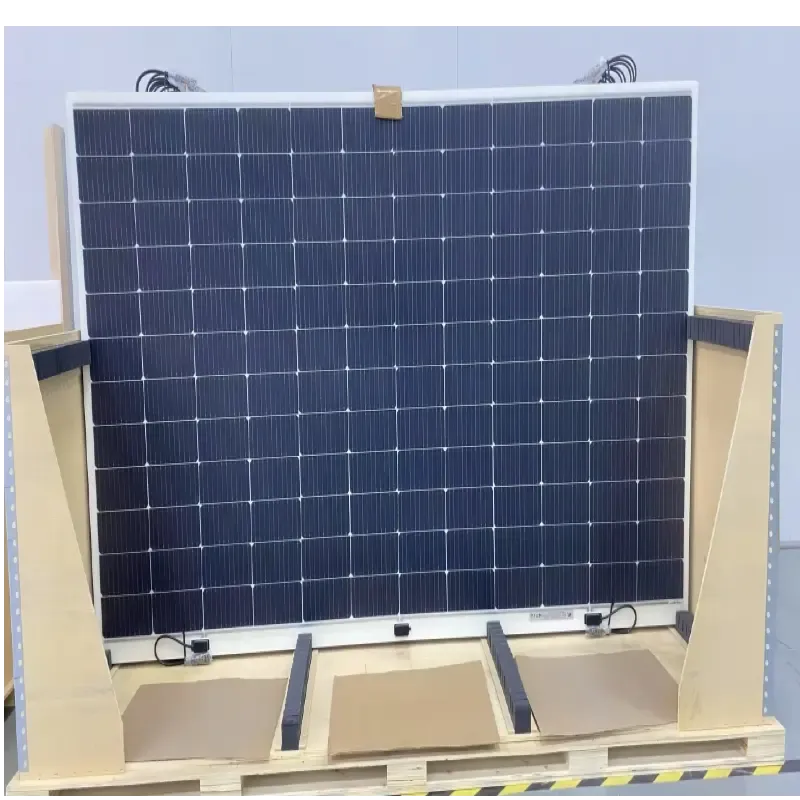
Building blocks
We supply off-grid systems as complete kits or as selected building blocks alongside your existing procurement — one BOM, one partner, with a documented compatibility review before dispatch. Battery and storage items are specified in the BOM and supplied per the agreed project scope.
Our 200 W to 535 W standard flexible platform, or custom-format modules engineered to your available mounting area — curved shelters, container roofs, tower platforms and equipment enclosures.
Selected against array voltage and current windows and the battery charging profile, so the array operates at its proper point across seasons and temperatures.
Capacity and chemistry selected for the required autonomy and cycle duty, with matching charge parameters.
Rail-free options for curved substrates — fastening eyelets or full-surface bonding as stated on the 200 W model datasheet — plus conventional mounting where the site allows.
MC4-compatible connectors, output cable lengths customizable per project (4.0 mm², 400 mm standard on the M10 flexible series), and string protection guidance at BOM level.
One BOM, one partner: modules, controller, storage, mounting and cabling brought together in a single bill of materials with a documented compatibility review.
Typical applications
Each scenario pairs a pain point with a configuration approach — and the watch-outs our engineers check before dispatch.
Diesel pumping ties water output to fuel logistics. The PV array is sized to the pump's hydraulic demand and daily water volume; water storage can take the role of energy storage where tank capacity allows. Watch-outs: pump surge current, dry-run protection, array voltage window of the pump controller.
Unattended sites with zero tolerance for downtime. Steady DC loads favor compact arrays with generous autonomy; module format can be engineered to fit tower platforms and shelter roofs. Watch-outs: temperature-corrected Voc against controller maximum input, wind loading, remote battery-state monitoring.
Fuel-driven power at scale plus instrument, SCADA and camp loads. Modular array blocks grow with the site; critical loads are separated from convenience loads. Watch-outs: dust on modules, temperature and altitude derating, safety zoning.
Pastures, wells and storehouses sit far from the meter. Pumping, lighting, fencing and monitoring loads group into scalable clusters sharing one module platform and spares inventory. Watch-outs: seasonal load swings, theft- and livestock-resistant mounting.
Fuel deliveries by boat are expensive and weather-dependent; salt-laden air is hostile to electrical equipment. Corrosion-aware component selection, with salt-mist (IEC 61701) test coverage as stated on the 200 W model datasheet; storage sized around delivery interruptions.
Trenching cable along perimeters, pipelines and roads often costs more than the equipment it feeds. Standalone pole units — module, charge controller and battery sized to the duty cycle — deploy without cabling works. Watch-outs: winter sun angles, cloudy-period autonomy, vandalism-resistant mounting.
FAQ
What EPC contractors, integrators and distributors ask before specifying an off-grid system.
Questions about your site? Email sales1@polynetpv.com.
Get a system BOM
Send your load list and site conditions. Our engineers return a sizing review and a complete bill of materials — PV, controller, battery, mounting and cabling — with a documented compatibility check.
Site details
Load list, location, autonomy and mounting area — we take it from there.